By India White
•
March 15, 2026
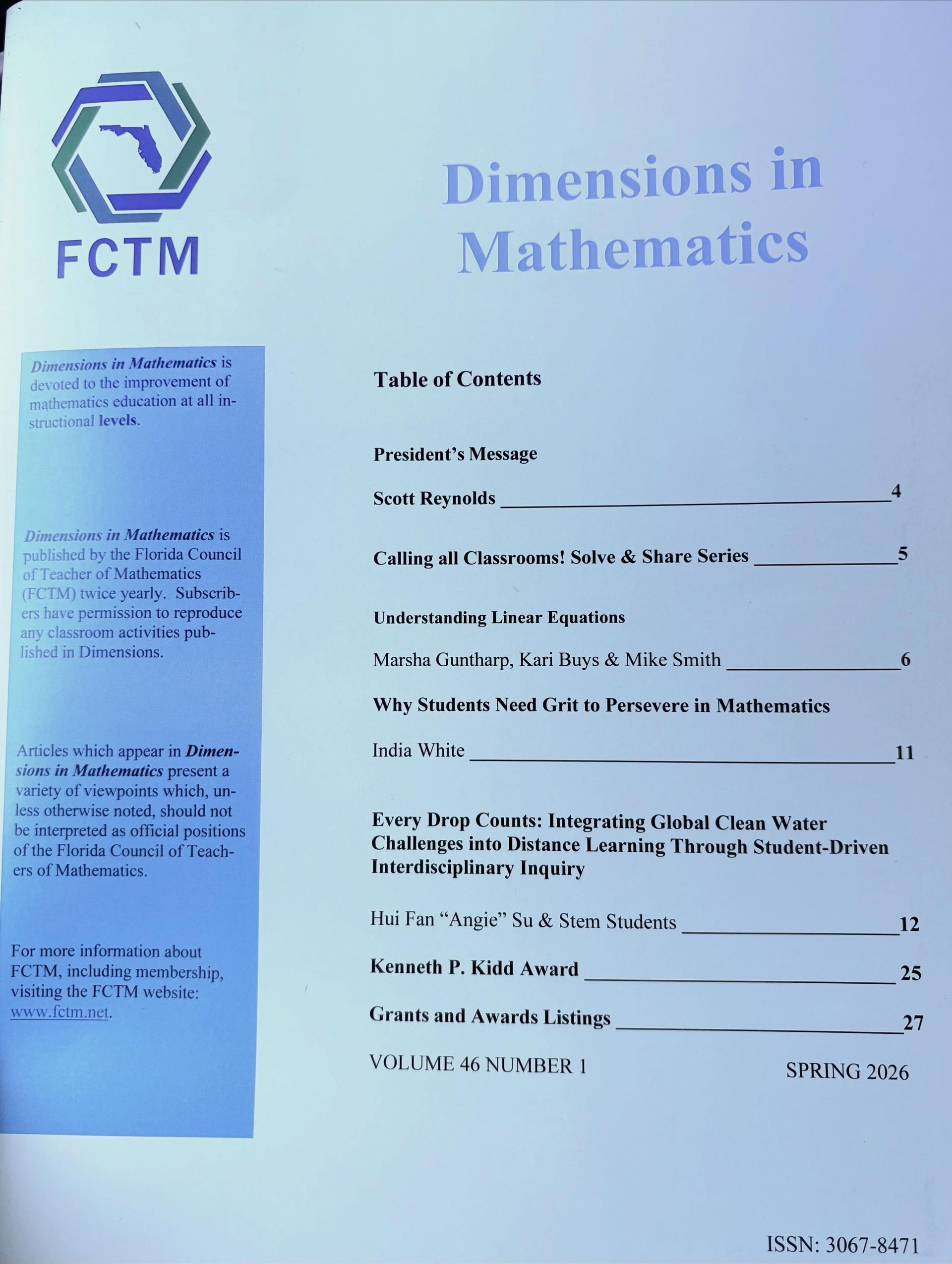
Pi Day and the Power of G.R.I.T. in Mathematics Why March 14 is More Than Just a Math Celebration Every year on March 14 (3/14), mathematicians, teachers, and students around the world celebrate Pi Day—a day dedicated to the mathematical constant π (pi). While Pi Day is often filled with pie-themed treats, math games, and creative activities, it also offers a powerful opportunity to help students develop something even more important than memorizing digits of π. It offers a chance to build G.R.I.T. As I often share in my work with educators and students, G.R.I.T. stands for Great Resilience in Time and is built on four pillars: * Growth Mindset * Resilience * Self-Efficacy * Time Management Mathematics is one of the most powerful subjects for cultivating these traits, and Pi Day gives us a fun and meaningful entry point. nderstanding π: A Lesson in Persistence At its core, π (pi) represents the relationship between a circle’s circumference and its diameter. Pi = Circumference/Diameter This constant is approximately 3.14, but mathematicians have calculated trillions of digits beyond the decimal. Think about that for a moment. The digits of π never repeat and never end. Mathematicians throughout history have spent centuries trying to calculate it more accurately. That alone is a lesson in grit. Mathematics often requires patience, perseverance, and the willingness to keep going—even when answers are not immediately obvious. How Pi Day Builds the G.R.I.T. Framework 1. Growth Mindset: Math Is About Learning, Not Perfection Pi Day reminds students that mathematics is not about getting everything right the first time. When students explore circles, approximate π, or investigate how it works, they begin to realize that mistakes are part of discovery. Encouraging students to say: ✨ “I don’t understand this yet.” instead of ❌ “I’m bad at math.” helps shift their mindset toward growth. A growth mindset allows students to embrace mathematical challenges rather than avoid them. 2. Resilience: Productive Struggle Matters One of the most important lessons students learn through mathematics is that struggle is part of the process. When students measure circular objects in the classroom and calculate approximate values for π, they may initially get inconsistent results. Instead of giving up, they must adjust their measurements and try again. This is where resilience grows. In a G.R.I.T. classroom, we remind students: 📌Every mathematician has struggled before discovering something meaningful. Pi itself was not discovered overnight—it took centuries of investigation. 3. Self-Efficacy: Building Confidence Through Exploration Self-efficacy is the belief that “I can do this.” Pi Day activities help students develop that confidence because they experience mathematics in a hands-on, engaging way . Examples include: 🥧 Measuring pies or circular objects 📏 Finding circumference and diameter 🧠 Memorizing digits of π 🎲 Playing Pi-related math games When students successfully apply math concepts in fun ways, they begin to see themselves as capable mathematicians. This belief is critical for long-term success in STEM fields. 4. Time Management: Breaking Big Problems into Steps Another key component of the G.R.I.T. Framework is time management. Mathematics often requires solving complex problems step by step. Pi Day activities can model this by showing students how mathematicians approach difficult problems. For example, students might: 1️⃣ Measure a circle 2️⃣ Record circumference 3️⃣ Measure diameter 4️⃣ Calculate the ratio Breaking the task into manageable steps teaches students that big problems become solvable when approached strategically. Pi Day Is More Than Pie While Pi Day often includes fun traditions like eating pie or reciting digits of π, its deeper value lies in the mindset it cultivates. Mathematics teaches students that: ✔ Learning takes time ✔ Persistence leads to discovery ✔ Mistakes are part of the process ✔ Confidence grows through practice These lessons extend far beyond the math classroom. They prepare students for life. Final Thoughts: Let’s Get Gritty With Math As educators, parents, and leaders, we must remember that mathematics is not just about numbers—it is about developing thinkers, problem solvers, and resilient learners. Pi Day provides the perfect opportunity to celebrate both mathematics and perseverance. When students experience math through the lens of the G.R.I.T. Framework, they begin to understand that success is not about immediate answers. It is about Great Resilience in Time. So this Pi Day, enjoy a slice of pie—but more importantly, encourage students to stay gritty, keep exploring, and never stop learning. Happy Pi Day! ✍🏽 Dr. India White TEDx Speaker | National Education Consultant Creator of the G.R.I.T. Framework (Great Resilience in Time) Empowering educators and students to thrive through perseverance in mathematics. Visit www.india-white.com/books to grab a copy of your Grit Workbook for Teachers!